Agim Zajmi, (1936-2013), Scenographer, painter, teacher! Holds the title “Pepople`s Painter” and “Professor”
Agim Zajmi was born in Tirana on November 28. His family was exiled from Peja, Kosovo, Albania as early as 1920. In 1957, he graduated from the “Jordan Misja” Artistic Lyceum in Tirana and then began his higher studies in scenography at the Academy of Arts in Leningrad (today Saint Petersburg), in the former Soviet Union, completing them in 1961.
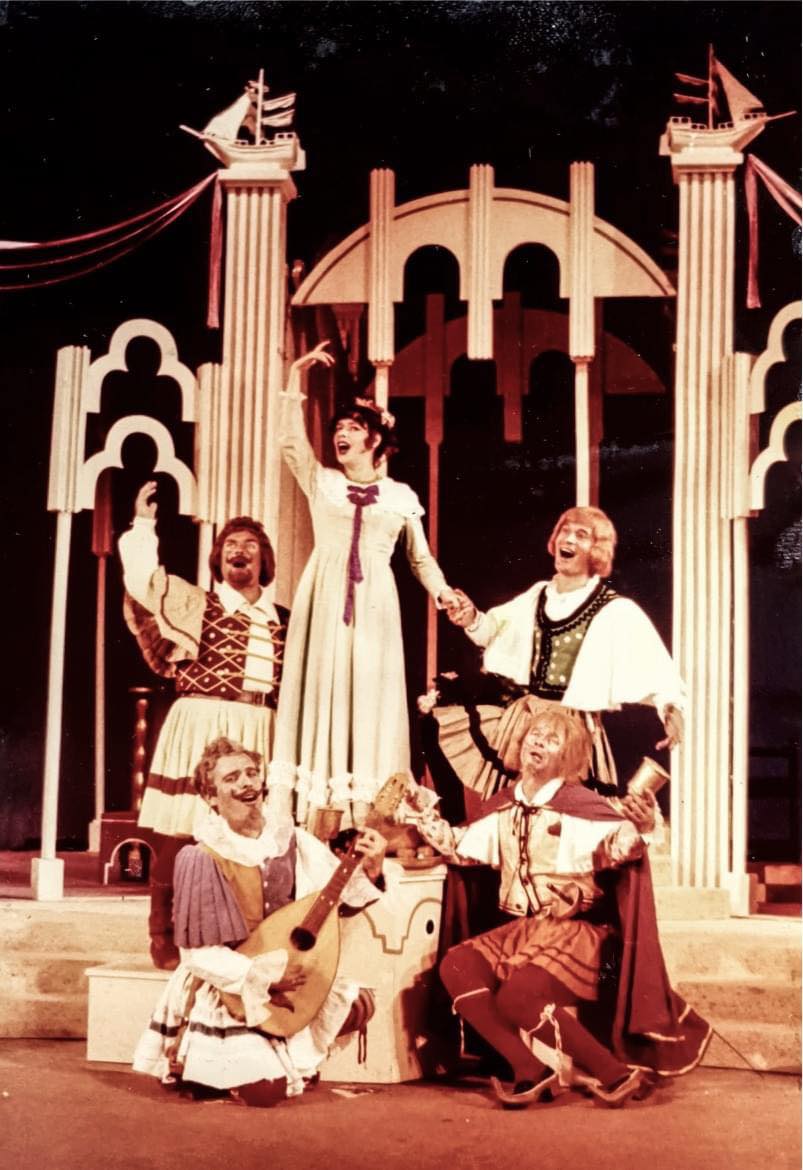
Agim first worked as a scenographer at the Opera and Ballet Theater, continued at the “Teatri Popullor”, and later (in 1978) became a lecturer at the High Institute of Arts, where he remained until his retirement in 2003. Over more than 40 years of continuous work and creative activity, he completed more than 250 scenographic projects, covering both national and international dramaturgy, collaborating with many theaters across the Albanian-speaking region (Albania, Kosovo, North Macedonia).
His most fruitful collaboration was with director Pirro Mani, with whom he realized over 40 projects. Agim Zajmi is also recognized as one of the most prominent costume designers in Albanian theater, with over 300 productions. His costume sketches stood out for their attention to the character’s nature, the historical context, the setting, and their symbolic and allegorical interpretations.
His scenographic work is distinguished by the new visual language he introduced in the 1960s and beyond — marked by strong ideas, clear messages, and an epic spirit through austere execution (e.g., Qielli i kuq, Perkolgjinajt, Besa e Madhe, Permbytja e madhe).
He employed expressive and allegorical forms rich in meaning, extending to scenographic composition, decoration treatment, costume design, the architectural conception of the theater space, and the use of light and color (Cuca e Malëve, Fytyra e Dytë, Arturo Ui).
Agim Zajmi liberated the stage from the overload of descriptive, naturalistic elements. In productions such as Keneta, Hije të Natës, Toka e Jonë, Familja e Peshkatarit, he brought more dynamic stage designs and incorporated contemporary techniques, as seen in Gjenerali i Ushtrisë së Vdekur, Nata e 12-të, Romeo dhe Xhuljeta, Auditori. He emphasized the actor as the central figure on stage, ensuring that scenography served the performance itself — evident in works like Luiza Miller, Fytyra e Dytë, Vdekja e një Komisioneri, among others.
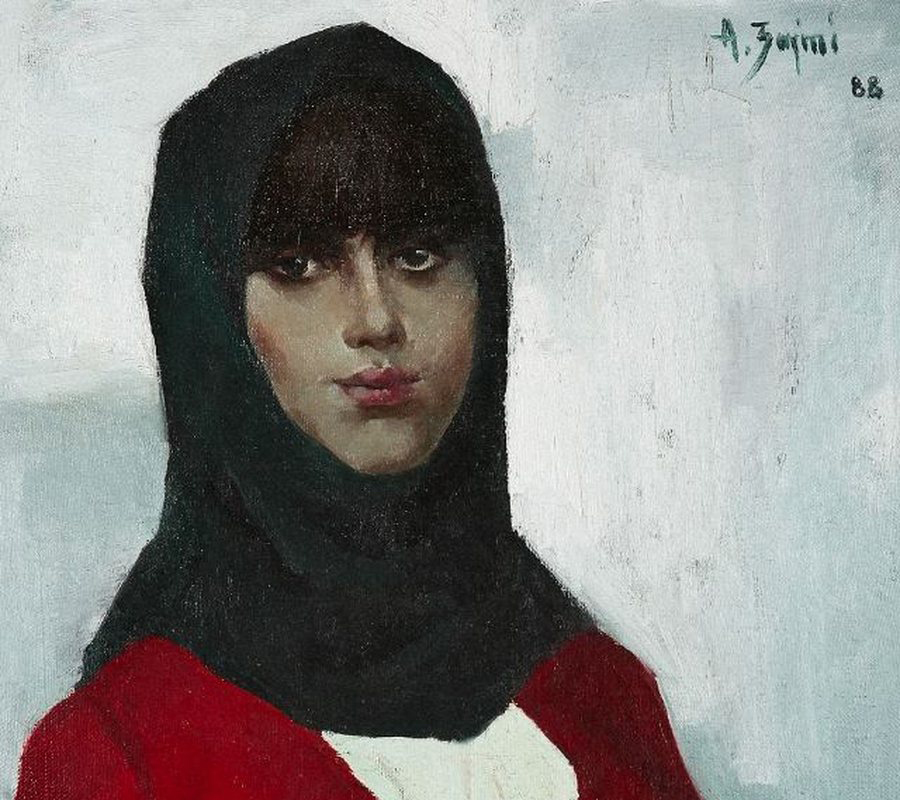
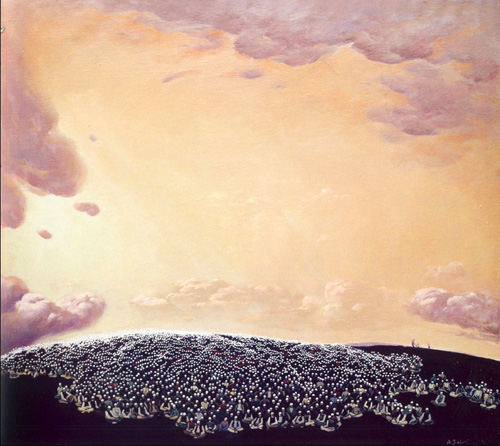
In addition to scenography and costume design, A. Zajmi was also a distinguished easel painter, known for his landscapes, compositional works, and portraits. Some of his notable paintings include Dede Gjoluli, Ganimet Terbeshi, Fusha e Kosovës, Vasil Laçi, among others.
More at the link below.
kinematografia-shqiptare-sporti.com, 2 november 2021